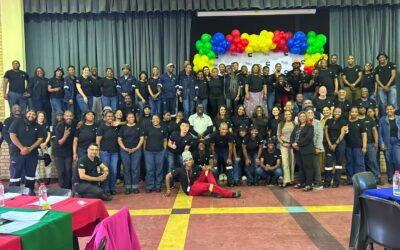
In South Africa’s evolving Technical and Vocational Education and Training (TVET) landscape, infrastructure development and Occupational Health and Safety (OHS) compliance are no longer support functions, they are critical enablers of academic excellence, student success, and institutional resilience. At False Bay TVET College OHS, facilities, and infrastructure are in the process of driving a safe, compliant, and future-focused innovation.
Ms Estelle May, the College’s Facilities and Occupational Health and Safety Officer has played a pivotal role in aligning infrastructure and compliance systems with educational delivery and accreditation standards. She and her team has worked across the College’s five campuses and Central Office, contributing to the design of safe, future-ready environments that support both learning and legislative requirements.
Safety as a Strategic Asset
False Bay TVET College has redefined its approach to OHS, moving away from a “tick-box” compliance culture and toward a proactive, system-driven safety strategy. In 2024, the College introduced 21 new Occupational Certificate programmes nearly triple the number from the previous year, made possible through rigorous infrastructure readiness and strategic collaboration.
The Megawatt Workshop exemplifies this synergy. Designed as a fully compliant, industry-aligned training space, the workshop enables students to learn using state-of-the-art equipment in a risk-controlled environment. It has drawn the attention of industry partners and funders, proving that safety and innovation can and must coexist.
“Compliance doesn’t slow us down,” says Ms May. “It’s what enables us to move faster, more confidently, and more sustainably.”
The Consequences of Non-Compliance
Failure to maintain facilities or meet OHS requirements can have serious legal, operational, and reputational consequences.
These include:
Legal Liability and Fines: Institutions may face penalties or forced closures for non-adherence to OHS legislation and building regulations.
Health and Safety Risks: Poorly maintained facilities pose direct threats to the well-being of students, staff, and visitors, including injury, trauma, or loss of life.
Accreditation Challenges: Non-compliance can delay or block programme approvals, limiting institutional offerings and growth potential.
Loss of Industry Trust: Employers and funders are less likely to partner with colleges that do not uphold safe, modern learning environments.
“The cost of non-compliance isn’t just financial—it’s reputational,” Ms May warns. “It signals to stakeholders that safety isn’t a priority, which undermines confidence in our qualifications and graduates.”
Infrastructure that Enables Learning
In 2024, False Bay TVET College invested in a series of infrastructure projects that directly enhance safety, reliability, and accessibility, including:
- Generator installations to maintain operations during loadshedding.
- UPS battery replacements to ensure ICT and teaching continuity.
- Lift upgrades at Fish Hoek Campus to improve accessibility for persons with disabilities.
- Potable water network upgrades at Westlake Campus.
- Fire safety enhancements across all campuses.
“These are not optional upgrades—they’re essential investments in operational resilience and quality learning,” Ms May explains.
Empowering Staff as Safety Ambassadors
Key to the College’s success has been a deliberate focus on staff ownership of OHS requirements. False Bay TVET College trains their staff not just to follow safety protocols, but to serve as ambassadors and role models for campus wide compliance.
Staff are trained in essential safety roles including but not limit to:
- First Aiders
- Fire Wardens
- Evacuation Marshalls
- Health and Safety Representatives
“Compliance is everyone’s responsibility,” says Ms May. “When staff are informed, equipped, and empowered, safety becomes instinctive. It becomes part of who we are as a college.”
Smart Systems and Cross-Functional Planning
Ms May contributes to several internal structures, including the OHS Committee, Bid Specification Committee, and recently joined the Skills Development Committee, where safety planning is integrated into broader institutional decision-making.
This collaborative approach ensures that OHS considerations are not isolated to Facilities, but embedded across academic, administrative, and operational functions. It also improves the College’s ability to adapt quickly in response to emerging needs and industry trends.
Sector-Wide Recommendations
Based on her experience, Ms May would like to join other TVET colleges by following recommendations in aiming to improve their OHS compliance and infrastructure efficiency:
- Adopt Preventive Maintenance Planning
Regular inspections and proactive maintenance reduce long-term costs and prevent crises. - Create Cross-Functional Compliance Committees
Collaboration between departments ensures compliance is built into every stage of operations. - Digitise Safety and Maintenance Systems
Use digital tools to track inspections, report incidents, and monitor compliance tasks. - Invest in Staff Development
Provide OHS awareness training for all staff, refresher (mandatory) training for Facilities & OHS personnel, to foster shared responsibility. - Ensure Universal Accessibility
Infrastructure upgrades must consider the needs of students and staff with disabilities. - Benchmark with Peer Institutions
Learn from sector best practices and develop shared tools to improve compliance maturity. - Plan with Accreditation in Mind
Align infrastructure development with future programme delivery and accreditation standards.
Looking Ahead
As the demand for skilled graduates and workplace readiness continues to rise, TVET institutions must strengthen their foundation with safe, compliant and responsive campuses. False Bay TVET College under the guidance of professionals like Ms Estelle May is demonstrating that smart investment in safety and infrastructure is not a cost but a competitive advantage.
“Infrastructure (Facilities) and OHS are not peripheral,” concludes Ms May. “They are essential to quality, credibility, and future-readiness. When we invest in safety, we invest in people and that’s what education is ultimately about.”
“Occupational Health and Safety (OHS) is an ongoing journey, it’s not perfect, nor is it cast in stone. There will always be areas that need improvement and continuous improvement in OHS and facilities management relies on honest, constructive input from all stakeholders, staff, students, and management alike. It’s not about pointing fingers, but about fostering a collaborative culture that prioritises safety, functionality, and shared accountability.”
About Ms Estelle May
 She brings over a decade of experience in safety compliance and facilities management. In 2018 she started as the Facilities and Occupational Health and Safety (OHS) Officer at False Bay TVET College, she has supported OHS implementation across all campuses, contributing to the accreditation of more than 20 qualifications. Estelle serves on several internal committees, promoting a systems-based approach to safety and compliance.
Her holistic view is that she remains committed to assisting and creating safe, future-ready learning environments that support innovation, sustainability and excellence in the TVET sector.
Partner with Us to Shape the Future Workforce
False Bay TVET College invites industry partners to invest in facilities that support high-quality, industry-aligned teaching and learning. Your support helps us equip workshops and classrooms that reflect real-world environments, ensuring students graduate ready to contribute from day one.
By investing in our infrastructure, you’re not only supporting skills development—you’re building the future workforce your industry needs. Let’s work together to create safe, modern, and future-ready learning spaces.
Partner with purpose. Invest in impact. Empower education.
Contact us today to explore collaboration opportunities.
Partner Registration Form | False Bay TVET College